
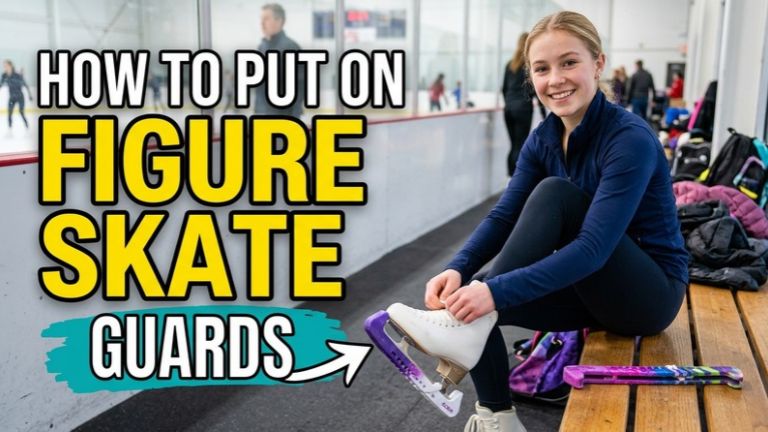
To put on figure skate guards correctly, use hard plastic or rubber guards for walking off the ice. Hook the front loop over the toe pick, then stretch the spring-loaded strap around the blade tail. When you store your skates in a bag, switch to moisture-wicking soft soakers after wiping the blades completely dry with a microfiber towel.
Improper guard use is the number one reason skaters ruin sharp edges and cause early rust. Walking off the ice without hard guards dulls the edge fast. Leaving damp blades inside rubber covers traps water against the steel.
In this guide, I will explain the difference between hard guards and soft soakers, how to size and assemble new guards, and the exact steps to put on each type.
Hard Guards vs. Soft Soakers: Which Do You Need?
You need both, and each one has its own job. Mixing them up is one of the most common and costly mistakes I see. Here is how they differ.
Hard Plastic or Rubber Guards
Hard guards are for walking on concrete, wood, or rubber matting off the ice. They protect the edges from the hard surfaces between the ice and the bench. The key rule is simple: never store your skates in hard guards inside your bag. They trap water against the steel and can cause rust within hours.
Soft Soakers (Terry Cloth Covers)
Soft soakers absorb leftover condensation during transport and storage inside your skate bag. They work only if the blade is dry first, so always wipe your blades before you slip them on. If you want to sew your own pair, my guide on how to make figure skate soakers has a full pattern.
Preparing Your Guards: Cutting and Spring Assembly
New hard guards often come out of the package in several pieces. Sizing them can feel confusing the first time. Take your time here, because a well-fitted guard stays on and protects better.
1. Measure the Runner Length
Lay the unassembled guard halves against your blade runner, from the toe pick to the tail. This shows you how much length you need. Check it against the blade you are actually using.
2. Trim the Plastic Gap
Cut equal portions off the middle plastic channels with heavy-duty shears or a utility knife. Leave a 0.5 to 1 inch spring gap. Cut slowly and keep your hands clear of the blade and the knife.
3. Install the Springs or Retention Straps
Screw or hook the center tension springs into place. This creates a snug, self-pulling fit that holds the guard on the blade. Test it before you take it to the rink.
4 Steps to Put On Hard Figure Skate Guards Properly
Once your guards are assembled, putting them on takes only a few seconds. I follow the same four steps every time I leave the ice. Here is the routine.
Step 1: Sit Down and Stabilize the Skate
Secure your foot on a bench or chair before you reach for the guards. Trying to do this standing up on slippery ground is how people fall. Sitting also keeps your hands steady around the sharp edges.
Step 2: Hook the Toe Pick First
Place the front pocket of the hard guard firmly over the top of the toe pick teeth. Make sure it sits snugly. This anchors the guard so it does not slide while you finish.
Step 3: Stretch the Guard Along the Runner
Pull the rear half back over the bottom curve of the blade, known as the rocker. Keep an even tension so the guard follows the shape of the runner.
Step 4: Secure Over the Blade Tail
Snap the rubber strap or spring tension mechanism tightly over the rear heel stanchion and tail. Give it a gentle tug to confirm it will not slip off. Now you are ready to walk safely.
How to Put On Soft Soakers for Safe Bag Storage
Soft soakers go on after you are done walking and ready to pack up. This step completes the care routine. It only takes about a minute.
Step 1: Thoroughly Wipe Down the Blades
Use a clean microfiber cloth to dry the runner, the stanchions, and the leather sole. Pay attention to the corners and screw areas, because water hides there.
Step 2: Slide the Soaker from Front to Back
Slip the elastic opening of the soaker over the front toe pick. Pull it taut across the runner until it covers the tail fully. Check that no steel is exposed.
Step 3: Unzip the Bag for Airflow
At home, keep your skate bag partially open so any leftover moisture can evaporate. A sealed bag turns into a rust trap.
Guard Application Rules at a Glance
This table sums up when to use each type and where it belongs. Keep it in mind next time you pack up.
| Guard Type | When to Put On | How to Apply | Storage Location |
|---|---|---|---|
| Hard guards | Before stepping off the ice surface | Hook toe pick, then stretch over tail | Bench side / off-ice walking |
| Soft soakers | After wiping blades dry off the ice | Stretch elastic cover over the whole runner | Inside skate bag |
Final Thoughts
Using the right guard at the right time preserves blade sharpness and prevents costly rust damage. Hard guards are for walking off the ice, and soft soakers are for storage. Wipe your blades dry between the two, and your edges will stay in great shape.
Frequently Asked Questions
Can you walk on concrete with hard figure skate guards?
Yes, that is what they are made for. Hard guards protect your edges on concrete, wood, and rubber matting. Walking without them dulls the edge quickly.
Why do my figure skate guards keep falling off?
The most likely cause is poor sizing or weak tension. Check that the guard fits the full length of the blade and that the spring or strap is tight enough. If the gap is too large or the spring is worn, adjust or replace it.
How tight should hard skate guard springs be?
They should be snug enough to hold the guard on while you walk, without being hard to remove. The guard should stay in place when you tug it lightly. If you struggle to take it off, loosen the tension a little.
Can you leave soft soakers on figure skates forever?
No. Soakers are for storage and transport, and they only help if they are dry. Do not leave them on inside an airtight bag, and take them off to dry after each use so they are ready next time.
