
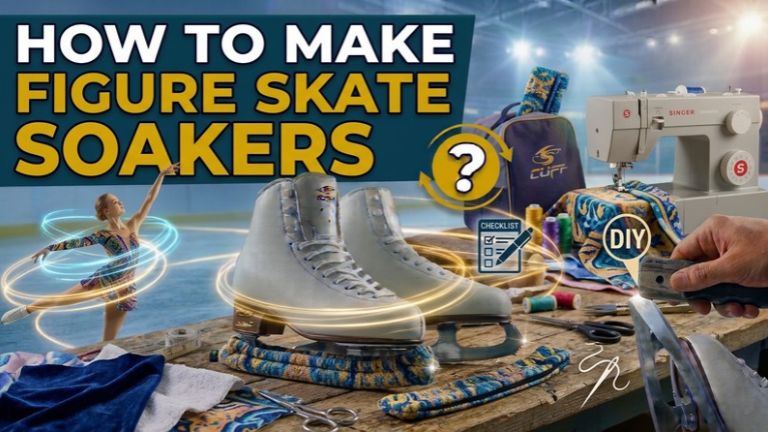
Store-bought soakers can cost $15 to $30+, but making your own plush, absorbent pair takes under an hour. You also get to pick any fabric you like, so your skate bag can finally match your style.
To make figure skate soakers, measure your blade length and height, then cut outer fabric strips and terry cloth or fleece lining strips, adding 2 inches for seam allowance and foam padding. Stitch the lining to the foam inserts, add an elastic casing at the top opening, and sew the bottom closed to create a snug, moisture-wicking pocket for the blade.
In this guide, I will explain what soakers do, list the materials, walk through each sewing step, and share a sizing chart and care tips so your homemade pair lasts.
What Are Skate Soakers and Why Do You Need Them?
Skate soakers are thick, soft covers made from terry cloth or fleece-lined fabric. They slip over your blades to absorb the leftover moisture and condensation from cold steel after you skate. Without them, that water sits on the metal and leads to rust.
Soakers vs. Hard Guards
These two products look similar in your bag, but they do very different jobs. Mixing them up is one of the most common beginner mistakes.
- Hard guards: Rigid plastic or rubber covers used only for walking off the ice on hard surfaces.
- Soakers: Soft cloth covers used strictly for storage in your skate bag to prevent rust, nicks, and moisture buildup.
Why Custom DIY Soakers Are Better
When you sew your own, you control every detail. You can choose ultra-absorbent microfiber or terry cloth linings and add extra padding where you need it. You can also customize the design, which is a nice touch for kids and teams.
Materials and Tools You Will Need
Gather everything before you start. Most of these items are easy to find at a fabric store, and some may already be in your sewing kit.
- Outer fabric: Plush fleece, flannel, cotton print, or faux fur (1/2 yard).
- Inner lining (moisture absorber): Thick terry cloth towel material or microfiber fabric.
- Internal padding (protection): 1/4-inch foam padding or high-density batting, which protects against the blade picks and tail punching through.
- Elastic band: 1/4-inch elastic, approximately 20 to 24 inches long in total, cut to the lengths in the sizing chart below.
- Notions: A sewing machine (or a needle and heavy-duty thread), fabric scissors, measuring tape, and safety pins.
Pick a lining that feels thick and soft. The lining is the part that does the real work, so do not skimp on it.
Step-by-Step Guide: How to Make Figure Skate Soakers
The whole project is simple, and you can finish it in under an hour. Take your time with the measuring, since a good fit makes everything else easier.
Step 1: Measure Your Skate Blade
Measure the total runner length, from the toe pick around to the blade tail. Then measure the height, from the stanchion down to the bottom edge. Add 2 inches to both the length and the height for seam allowance and foam bulk.
Step 2: Cut Your Fabric and Foam Pieces
Cut 4 outer fabric pieces, 4 inner lining pieces, and 2 foam base strips for the bottom of the blade. Label them if it helps, so you do not mix up the layers later.
Step 3: Assemble the Layered Blade Base
Sandwich the foam padding between the outer fabric and the terry cloth lining. This reinforces the bottom edge, which is the part that rests against sharp steel. A thicker base also helps protect the toe pick and the tail.
Step 4: Sew the Main Sleeve Body
Stitch the lining and the outer fabric right sides together along the bottom arc. Leave the top open. This forms the pocket your blade will slide into.
Step 5: Create the Elastic Top Casing
Fold over the top edge by 3/4 inch to make a casing channel. Use a safety pin to thread the elastic band through it. The elastic gathers the opening so the soaker stays snug on the blade.
Step 6: Secure the Elastic and Turn Right Side Out
Backstitch the ends of the elastic together firmly. Then turn the soaker right side out and test the fit on your blade. If it feels loose or too tight, adjust the elastic before you sew the second one.
Standard Measurement Guide by Skate Size
This chart gives you a quick starting point for each size range. Measure your own blade as well, since brands vary. Use the chart to double check your numbers.
| Skate Size / Blade Length | Fabric Cut Length | Fabric Cut Height | Elastic Length (Per Soaker) |
|---|---|---|---|
| Youth (7″ to 8.5″ blade) | 11 to 12 inches | 5 inches | 8 inches |
| Intermediate (8.75″ to 9.75″ blade) | 13 to 14 inches | 6 inches | 10 inches |
| Adult (10″ to 11.5″ blade) | 15 to 16 inches | 6.5 inches | 12 inches |
How to Care for Your Homemade Soakers
Soakers only protect your blades if they are dry. A wet soaker can cause the very rust you are trying to prevent. These habits keep them working well.
- Wash and dry them properly: Machine wash cold, then air dry completely. Never put damp soakers back on your blades.
- Replace worn lining: If the inner terry cloth wears thin over time, swap it out for fresh fabric.
- Do not leave them on permanently: Never leave soakers on the blades inside an airtight bag. Moisture needs somewhere to go.
After every session, wipe your blades with a microfiber cloth before you put the soakers on. For the full routine, my guide on how to take care of figure skates walks through each step.
Final Thoughts
Making your own figure skate soakers is a fun, budget-friendly sewing project. It protects expensive blades from rust and damage, and it lets you add your own style. A little fabric, some foam, and under an hour is all you need.
Once your soakers are done, pair them with good habits like wiping your blades and storing your skates in an open, ventilated space.
Frequently Asked Questions
Can you make skate soakers without a sewing machine?
Yes, you can. Use a needle and heavy-duty thread, and take your time with small, tight stitches. It takes longer than a machine, but the result can be just as sturdy.
What is the best fabric for figure skate soakers?
For the lining, thick terry cloth or microfiber is best because both absorb moisture well. For the outside, plush fleece, flannel, or cotton print all work, and faux fur adds a fun look. The padding layer matters too, since it protects against the toe pick and tail.
Can you use hand towels to make skate soakers?
Yes, a hand towel is a good source of terry cloth for the lining. Choose a thick one, wash it first, and cut it to the sizes in the chart. It is a budget-friendly way to get absorbent fabric.
How tight should figure skate soakers fit on the blade?
They should fit snugly enough to stay on, but not so tight that they are hard to remove. The elastic casing at the top holds the soaker in place. If it slides off or squeezes the blade, adjust the elastic.
