
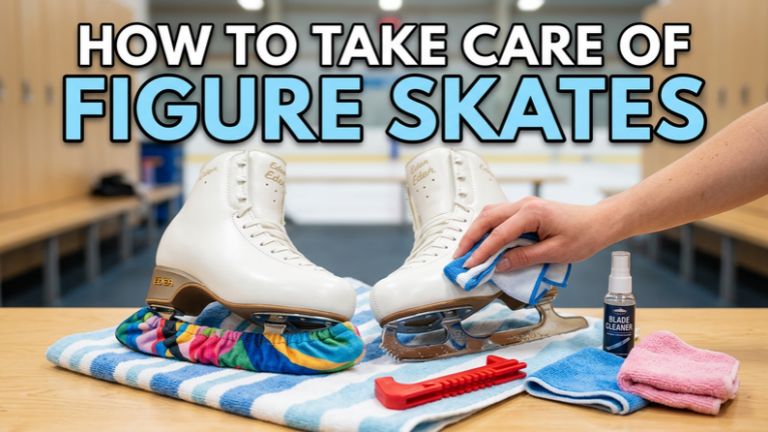
Good figure skates are not cheap. I learned that the hard way after watching a pair of boots fall apart much sooner than they should have, all because of a few bad habits. The good news is that most skate damage is easy to prevent.
Here is the short version of how to take care of figure skates. Wipe the blades dry after every session, store them with soft soakers (not hard guards), let the boots air dry at room temperature, and get the blades sharpened every 20 to 30 hours of ice time.
In this guide, I will walk you through blade care, boot care, storage, and the mistakes I see skaters make all the time. Each step takes only a few minutes. Together they can save you hundreds of dollars.
Why Figure Skate Care Matters
Figure skates take a lot of abuse. Your blades sit in cold, wet conditions, and your boots soak up sweat and moisture every session. If you leave them damp, the metal rusts and the leather breaks down.
Rusty blades lose their edges, and soggy boots lose their support. Both can affect how you skate and how safe you feel on the ice. A little care after each session keeps your skates performing the way they should.
Step-by-Step Care Right After Skating
The most important habits happen in the first ten minutes after you leave the ice. This is when moisture is at its worst. I do this same routine every single time, even when I am tired and just want to go home.
1. Wipe Down the Blades Thoroughly
Grab a soft microfiber cloth and wipe every part of each blade. Remove all the ice slush and condensation from the sides, the bottom edge, and the toe picks. Do not forget the blade soles and the mounting screws, because water loves to hide there.
If you only do one thing from this guide, make it this one. Dry blades do not rust. It really is that simple.
2. Switch Hard Guards for Soft Soakers
Hard guards are made for walking off the ice and nothing else. They protect your edges on floors and rubber mats. But if you leave them on in your bag, they trap moisture against the steel and cause rust.
As soon as I am off the ice and in a safe spot, I swap the hard guards for soft soakers. These are terrycloth covers that soak up the leftover water on the way home. Hang them up to dry once you get there, so they are ready for next time.
3. Unlace and Air Out the Boots
Loosen the laces all the way down and pull the tongue forward. This gives the inside of the boot room to breathe. I also pull the insoles out when I can, since that is where most of the sweat collects.
Letting air circulate is the best way to fight odor and mold. It also helps the boot hold its shape for longer.
How to Maintain Figure Skate Boots
Your boots are the heart of your skates. They give you support, so it is worth protecting them. Here is how I look after mine.
How to Dry Figure Skates Safely
Always let your boots dry at room temperature. Never use a hair dryer, a radiator, or any direct heat to speed things up. Heat can warp the boot, dry out the leather, and weaken the glue.
Patience pays off here. Set the skates somewhere with good airflow and leave them alone for several hours. A fan across the room is fine, but keep it a safe distance away.
Use Moisture Absorbers
Boots stay damp inside even when they feel dry on the outside. I like to use cedar inserts or small silica packs to pull out the extra moisture. They also help keep odor and mold away.
Replace silica packs when they stop working, and let cedar inserts dry out now and then. This small step makes a big difference in how fresh your skates smell.
Condition and Polish the Leather
Leather needs a little love to stay flexible. A light coat of leather conditioner or boot polish helps prevent cracking and keeps water from soaking in. I usually do this every month or two, depending on how often I skate.
Scuffs are normal, especially around the ankles and toes. You can touch them up with polish that matches your boot color. Boot tape or protective covers are also a good idea if you do a lot of jumps and spins that rub the leather.
Check Your Laces
Laces take more strain than most people think. Look for fraying, thin spots, or stiff and cracked sections. A snapped lace in the middle of a session is a real problem, and it is also an easy one to avoid.
Replace worn laces before they break. I keep a spare pair in my skate bag, just in case.
Figure Skate Blade Maintenance and Sharpening
Your blades are what make everything else possible. Dull or damaged edges make it hard to hold your turns and stops. Good blade care keeps you in control.
How Often to Sharpen Figure Skates
A common rule is to sharpen figure skates every 20 to 30 hours of ice time. That is a general guide, not a strict law. Skaters who do a lot of jumping or skate on rough ice may need sharpening sooner.
You can also go by feel. If your edges slip, if you struggle to hold a turn, or if your skates just feel off, it may be time. Do not wait until they are really dull.
Find the Right Sharpening Technician
Always take your figure skates to someone who specializes in them. Figure skate blades have a special shape, including a rocker and a toe pick, that is very different from hockey blades. A generic sharpening can ruin the profile of your blade.
I always ask the skate shop or pro shop who does the sharpening and how much experience they have with figure skates. A good technician will happily answer. If you are not sure, ask your coach for a recommendation.
Inspect Your Blades Before You Skate
Before stepping onto the ice, give each blade a quick look. It only takes about 30 seconds. Here is what I check for:
- Rust spots, even tiny ones
- Nicks or chips along the edges
- Loose screws where the blade meets the boot
- Dirt or debris caught on the blade
If you find rust, wipe it off right away and dry the blade well. If you see a nick, get it looked at by a technician before it gets worse.
How to Store Figure Skates
Good storage is what stops rust from coming back. This applies both to your everyday bag and to long breaks from skating.
Keep your soft soakers on while the skates are in your bag. Open the zippers a little bit so air can move through. A fully sealed bag traps moisture and turns into a rust and mold box.
In Your Skate Bag
If your bag has a ventilated section, use it. Never leave your skates in a hot car or a damp trunk, because both are hard on leather and metal.
Off-Season and Long-Term Storage
If you are taking a break from skating, store your skates somewhere cool and dry. A closet in a climate controlled room works well. Damp basements and hot attics are the worst places to keep them.
Before you put them away, clean and dry the blades completely. You can add a very light coat of oil or blade wax to help stop rust during the break. Just remember to wipe it off before you skate again.
5 Figure Skate Care Mistakes That Ruin Your Gear
I have made a few of these myself, so no judgment here. Avoid these mistakes and your skates will thank you.
- Leaving hard guards on in the bag. They trap water against the blades and cause rust.
- Using heat to dry your boots. Hair dryers and radiators can warp and damage the leather.
- Walking off the ice without hard guards. Even a few steps on a hard floor can dull your edges instantly.
- Storing skates in a closed, unventilated bag. Moisture gets stuck inside and has nowhere to go.
- Skipping the post skate wipe down. This is the number one cause of rust.
Final Thoughts
Learning how to take care of figure skates does not need to be complicated. Wipe your blades, use soft soakers, air out your boots, and sharpen on a regular schedule. These small habits take about five minutes and can save you hundreds of dollars over time.
Frequently Asked Questions
Can I wash my figure skate insoles?
In most cases, yes. Wash them gently by hand with mild soap and lukewarm water. Rinse well and let them air dry completely before putting them back. Avoid the washing machine and the dryer, and check the maker’s instructions if you are unsure.
Why are my figure skate blades rusting?
Almost always, the cause is moisture left on the blade. This happens when you skip wiping them down, leave hard guards on in the bag, or store them in a closed, damp space. Dry the blades after every session and use soft soakers, and the problem usually goes away.
How long should a pair of figure skates last?
It depends on the quality of the skates, how often you skate, and how well you care for them. Beginner boots may last a year or two, especially for growing kids. Higher quality boots that are well looked after can last several years, and the blades can often outlast the boots with proper sharpening.
