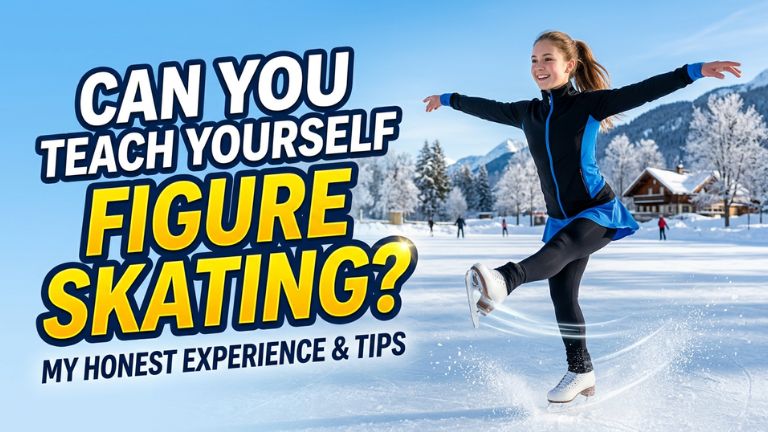
You can self-teach basic forward stroking, swizzles, and simple glides using video tutorials, but you cannot fully teach yourself figure skating safely or effectively. Skills like backward crossovers, spins, and jumps need real-time feedback from a professional coach to prevent injuries, bad muscle memory, and poor edge alignment.
Video tutorials make crossovers and spin entries look easy. But skating happens on a 4mm steel blade over hard ice, and self-teaching can quickly cross the line into risky technique.
In this guide, I will explain what you can learn alone, where the safety wall sits, the main dangers of going without a coach, and how to combine self-practice with low-cost instruction.
Can You Learn Figure Skating By Yourself? The Realistic Answer
The short answer is that you can build ice confidence and basic forward movement on your own. You cannot master true figure skating, which means jumps, spins, and deep edges, without professional instruction. Two things explain why.
The Visual Feedback Problem
When you skate, you cannot see your own posture, knee bend, or blade angle. A small flaw feels normal to you, even when it is holding you back. A coach sees it right away and can tell you what to change.
The Danger of Bad Muscle Memory
A habit learned while self-teaching is hard to undo. Fixing a bad habit often takes three times longer than learning the element correctly from day one. That is time and money you could have spent moving forward.
What Skills Can Be Self-Taught vs. Require a Coach?
This table shows where the line falls for common skills. Use it to decide when a lesson is worth the cost.
| Skill Level / Category | Self-Teachable with Videos? | Risk Level | Why a Coach Is Required |
|---|---|---|---|
| Basic balance and gliding | Yes (with caution) | Low | Natural balance and basic forward movement |
| Swizzles and stopping | Yes | Low to moderate | Safe edge acquisition, easy to self-correct |
| Backward stroking and crossovers | Moderate risk | Moderate | High risk of falling backward, weight distribution |
| Spins (scratch, sit, camel) | No | High | Centering physics, head alignment, and toe pick hazard |
| Jumps (waltz jump to axel) | Absolutely not | Severe | 5 to 8 times body weight landing forces, rotation mechanics |
The higher you go on the list, the more a coach matters. Jumps are the clearest example, because the landing forces are so large.
The Hidden Risks of Self-Teaching Figure Skating
Most skaters who teach themselves are not careless. They simply do not know what to look for. Here are the four biggest dangers.
1. Toe Pick Tripping and High-Impact Falls
Beginners often push off the toe pick instead of the inside edge. That can cause a sudden, hard fall forward onto the head or wrists. A coach spots this habit in the first few minutes.
2. Improper Ankle Pronation
Some skaters skate on their inner edges without noticing, and their ankles buckle inward. Over time, this strains the joints and wears out the boot support. It is easy to miss when you are alone.
3. Severe Injuries on Jumps and Spins
Landing rotationally off-axis puts immense torque on the knee ligaments (ACL and MCL) and the ankles. This is how serious injuries happen. Trying jumps with no coach is one of the riskiest choices a skater can make.
4. Costly Re-Learning Later
Many self-taught skaters end up paying a coach later to remove months of incorrect habits. That usually costs more than starting with lessons. It is also frustrating to feel like you are going backward.
How to Learn Figure Skating Smartly on a Budget
You do not need daily private coaching to learn safely. A hybrid approach gives you structure without a huge bill. Here is a simple plan.
Start with Learn to Skate Group Classes
Group classes cost $15 to $30 per session. They give you trained eyes on your foundational edges at a low price. If you want to see how group classes compare with other formats, my guide on how much figure skating lessons cost has the full breakdown.
Use Self-Practice Hours Wisely
Practice only the specific drills your coach assigned, and do it during public sessions. This keeps your practice focused and safe. Skip anything you have not been taught yet.
Video Record Yourself
Set a phone on the barrier and film your posture. Compare it with professional tutorial mechanics, and look for knee bend, head position, and where your weight sits. Seeing yourself fills in the visual feedback gap.
Book Occasional 15-Minute Tune-Up Lessons
Hire a coach once a month to check your self-practice and correct small flaws. A short lesson is cheaper than a full session and still gives you expert feedback.
Final Thoughts
Public sessions are great for self-guided practice, but professional instruction is the best safety net and the fastest path to real progress. Teach yourself the basics if you like, and bring in a coach before you try spins, jumps, or anything that feels risky. A little guidance early saves time, money, and injuries later.
Frequently Asked Questions
Can adults learn figure skating without a coach?
Adults can pick up the basics alone, such as gliding and simple stroking. For anything beyond that, a coach is strongly recommended. Adult group classes are a good low-cost way to start.
Are online video tutorials helpful for figure skating?
Yes, as a supplement. They can show you what a skill should look like and give you drills to try. They cannot see your body, so they cannot correct your mistakes. Use them alongside lessons, not instead of them.
How far can you get in figure skating by yourself?
Most people can reach basic comfort on the ice, including balance, gliding, and simple stops. Going further, into spins, jumps, and deep edges, needs a coach for safety and proper technique. A coach can also tell you what is realistic for your goals.
What is the safest way to fall on the ice when practicing alone?
Try to stay relaxed and fall to the side or backward onto the padded part of your body, rather than reaching out with your hands. Tuck your chin, keep your head up, and do not stiffen your arms. Wearing protective gear such as a helmet, wrist guards, and padded shorts helps. A coach can teach you how to fall safely in a few minutes.
