
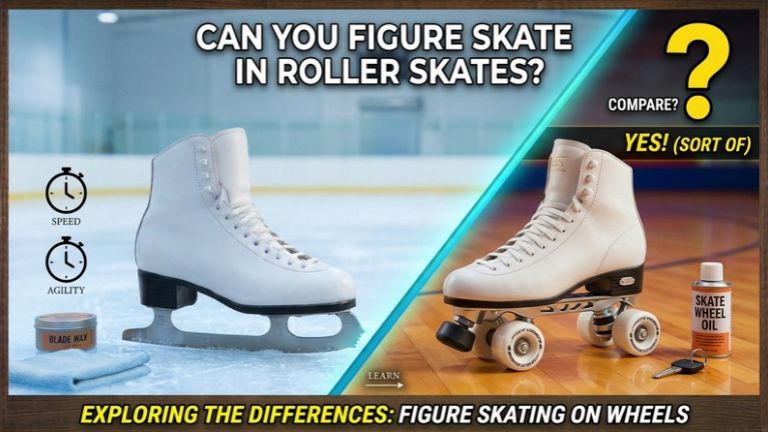
Yes, you can figure skate on roller skates. The sport is officially called artistic roller skating, and skaters perform jumps, spins, and edgework on either specialized quad skates with toe stops or inline figure skates with a front toe pick and a curved frame that mimics an ice blade.
Off-ice and wheeled skating are growing fast, and many ice skaters are curious about it. Some want to train when the rink is closed, and others just want to try something new. Either way, it helps to know how the equipment and the technique differ.
In this guide, I will explain the terms, compare quad and inline figure skates, and cover what changes if you switch from ice to wheels.
What Is “Figure Skating” on Roller Skates Called?
The terms can be confusing, so let me clear them up first. Figure skating on wheels goes by a couple of names, depending on the type of skate.
Artistic roller skating is the official competitive sport. Skaters perform jumps, spins, and footwork on quad skates, which have two wheels at the front and two at the back. It has its own rules, levels, and competitions.
Inline figure skating (sometimes called off-ice figure skating) uses inline frames with three or four wheels. These frames are made to feel like an ice blade, which is why ice skaters use them for off-ice practice. Some versions have a rubber toe pick at the front, much like a real figure skate.
Quad Artistic Skates vs Inline Figure Skates: Which Is Better?
Neither type is better for everyone. The right one depends on your goals and your background. Here is how each one works.
Artistic Quad Skates
Quad skates have a four wheel setup and a firm toe stop at the front. The wider wheel base gives good side to side stability, which helps with edge control and traditional artistic moves. Many skaters find them steady and easy to trust.
The toe stop does not work like a toe pick on ice. Spins and some footwork use a different technique, so ice skills do not copy over exactly.
Inline Figure Skates
Inline figure skates use a curved (rockered) wheel layout and often a rubber toe pick at the front. This setup comes closest to the feel of an ice blade. Ice skaters often choose them to practice jumps, spins, and edge changes off the ice.
The trade-off is that a narrow inline frame asks for good balance. It is less forgiving than quads for beginners.
Ice vs Quad vs Inline Figure Skates at a Glance
This table compares the three setups side by side. Exact feel varies by brand and setup, so treat it as a general guide.
| Feature | Ice Figure Skates | Artistic Quad Skates | Inline Figure Skates |
|---|---|---|---|
| Surface | Ice rinks | Wood, concrete, or smooth indoor floors | Wood, concrete, or smooth surfaces |
| Front stop | Metal toe pick | Adjustable rubber toe stop | Rubber toe pick |
| Base or frame | Steel blade | Plate with trucks and four wheels | Rockered three or four wheel frame |
| Closest to ice feel | Not applicable | Different, needs adjustment | Closest of the two wheeled options |
| Spin feel | On the blade rocker | On the front wheels and trucks | On the front wheel and toe pick area |
Can You Do Figure Skating Jumps and Spins on Roller Skates?
Yes, you can. Skaters on both quad and inline setups perform jumps and spins. The moves look familiar, but the technique shifts a little.
Jumps
Skaters do waltz jumps, salchows, axels, and more on wheels, including doubles and triples at the top levels. The rotation and timing are similar to ice. The big difference is the landing, because hard floors absorb much less impact than ice does.
Strong ankle and knee control matters a lot here. Good technique and a proper warm up protect your joints.
Spins
Spins are possible on both setups, but they feel different. On quads, the spin usually centers on the front inner wheels. On inline figure skates, the skater rocks on the front wheel near the toe pick.
Plan to spend time relearning the feel of your spins. Your ice skills will help, but they will not transfer perfectly.
Edgework
Deep edges depend on your setup. On quads, the adjustment of the trucks changes how the skate turns and leans. On inlines, wheel hardness and the rocker of the frame play a big part.
A coach or an experienced shop can help you tune your setup. Small changes can make a big difference in feel.
Key Adjustments When Switching from Ice to Roller Skates
If you skate on ice already, wheels will feel familiar in some ways and strange in others. These are the main changes to expect.
- Friction and speed: Wheels grip the floor more than steel glides on ice. You stop with T-stops or plow stops instead of scraping an edge.
- Fall impact: Falling on wood or asphalt hurts far more than falling on ice. Wear a helmet, wrist guards, and knee and elbow pads, especially in the early weeks.
- Skate weight: Plates, trucks, and wheels add weight compared with a lightweight ice setup. Your legs may tire sooner at first.
Take it slowly and treat the first few sessions as a learning period. Even strong ice skaters can feel like beginners again for a little while.
Final Thoughts
Figure skating on roller skates is real and fun. Artistic quad skates and inline figure skates both let you practice jumps, spins, and edgework on wheels, each with its own feel. Pick the setup that matches your goals, wear proper protection, and give yourself time to adjust.
If you already skate on ice, wheels can be a great way to keep training.
Frequently Asked Questions
Can you put ice figure skating boots on roller skate frames?
In some cases, yes. Certain boots can be mounted on wheeled plates or frames, but it depends on the boot, the frame, and a proper mounting. Have a skilled technician do the work, since a poor mount can hurt your balance and safety.
Is artistic roller skating harder than figure skating on ice?
They are hard in different ways. Ice has less friction and more glide, while wheels give more grip and a harder landing. Which one feels harder depends on your background and your goals.
Do inline figure skates feel exactly like ice skates?
No, but they are the closest wheeled option. The rocker and toe pick copy the feel of a blade, but wheels still behave differently from steel on ice. Expect a short adjustment period.
Can you practice figure skating on regular street roller blades?
Not really. Regular inline skates have no toe pick and a different frame, so they do not copy figure skating moves well. They are fine for fitness and basic balance, but not for jumps and spins.
