
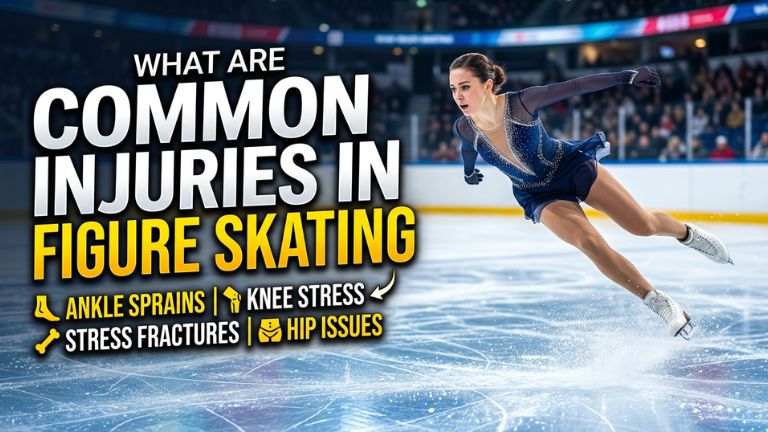
The most common figure skating injuries are overuse injuries that come from repeated high-impact jump landings. These include patellar tendinitis (jumper’s knee), ankle sprains, shin splints, lower back stress fractures, and boot-induced lace bite. Acute injuries like concussions and wrist fractures account for roughly 15% to 20% of all skating injuries.
Figure skating looks effortless and artistic, but it is one of the most physically demanding sports. Jump landings can put up to 8 times a skater’s body weight through the body. That adds up fast over hundreds of repetitions.
In this guide, I will explain the two main injury types, answer whether jumps hurt, walk through the five most frequent injuries, and share ways to prevent them. This is general information, not medical advice, so please see a doctor or sports medicine professional for any pain that does not go away.
Overuse vs Acute Trauma: The Two Main Categories
Skating injuries fall into two groups. Knowing the difference helps skaters, parents, and coaches spot problems early. Here is how they split.
Overuse Injuries (About 80% of Cases)
These build up slowly. They come from repetitive jump take-offs and landings, rigid boot constraints, and high training volume without enough rest. A small ache that keeps returning is often the first sign.
Acute Injuries (About 20% of Cases)
These happen suddenly. Common causes are falls, lost edge control, collisions, and partner lifts that go wrong. Concussions and wrist fractures are typical examples.
Do Figure Skating Jumps Hurt?
Yes, landing multi-rotational jumps places a lot of mechanical shock on the body. A skater absorbs forces equal to 5 to 8 times their body weight on a single rigid blade. That is why technique matters so much.
Why Proper Technique Prevents Pain
A deep knee bend acts as a shock absorber. The thigh muscles control the landing and spread the energy across the joints, instead of sending it into the spine or knee. If you want to know why the boot is built to help with this, my guide on why figure skates have heels explains how the design encourages a natural knee bend.
Micro-Trauma Over Time
Even clean landings cause tiny tears in muscles and tendons. If rest is not part of the plan, that can lead to chronic soreness. Recovery is part of training, not a break from it.
Common Figure Skating Injuries by Body Region
This table sorts the main injuries by where they happen and why. Use it as a quick reference.
| Body Region | Common Injury | Injury Type | Primary Cause / Mechanism |
|---|---|---|---|
| Ankle and foot | Lace bite / tendinitis | Overuse | Rigid boot tongue pressure against tendons |
| Ankle and foot | Lateral ankle sprain | Acute | Rolling the ankle off the blade edge on landing |
| Knee | Patellar tendinitis (“jumper’s knee”) | Overuse | Repetitive explosive jump take-offs and absorption |
| Lower back | Spondylolysis (stress fracture) | Overuse | Excessive hyperextension during spins (e.g., layback) |
| Hip and groin | Hip labral tears / strains | Overuse | Deep edge work, split jumps, and rotational torque |
| Wrist and head | Concussions and wrist fractures | Acute | Breaking falls backward or forward on hard ice |
The 5 Most Frequent Injuries in Figure Skaters
Here is a closer look at the five injuries skaters talk about most. For each one, I explain what it is and why it happens.
1. Ankle Sprains and Ligament Strain
There are two main types. Low ankle sprains usually come from edge rolls, when the foot rolls off the side of the blade. High ankle sprains tend to come from twisting during a landing.
2. Patellar Tendinitis (Jumper’s Knee)
This is irritation and tiny tears in the tendon beneath the kneecap. It comes from repeatedly launching into the air and absorbing the landing. Pain below the kneecap that gets worse after jump practice is a common sign.
3. Lace Bite and Bursitis
Lace bite is inflammation of the tendons on top of the foot. It is caused by overly tight laces or a stiff leather tongue pressing down. Many skaters use gel sleeves to ease the pressure.
4. Lower Back Pain and Spondylolysis
Layback spins and catch-foot spirals ask the lower spine to bend backward again and again. That stress can lead to pain and, in some cases, a stress fracture in the spine called spondylolysis. Back pain that keeps returning deserves a medical check.
5. Stress Fractures (Navicular, Tibia, Foot)
These are tiny cracks in the bone from cumulative impact with too little rest between sessions. They often start as a vague ache that slowly gets worse. Do not skate through that kind of pain.
How to Prevent Injuries On and Off the Ice
Most overuse injuries can be reduced with smart habits. These four areas make the biggest difference.
Off-Ice Strength and Plyometrics
Build core strength, glute activation, and eccentric single-leg squat strength. Strong muscles take pressure off the joints during landings. Your coach or a sports trainer can build a plan that fits your level.
Proper Boot Fitting and Break-In
Make sure the boot stiffness matches the skater. Young skaters should avoid boots that are too stiff for their level. Gel sleeves help with lace bite while the boot breaks in.
Worn out boots can raise injury risk too. My guide on how long figure skates last explains the signs, like deep ankle creasing and lost support.
Periodized Training Schedules
Manage how many jump repetitions a skater does in each session. This protects bones and tendons from fatigue. Ask your coach to plan rest days and lighter weeks.
Warm-Up and Cool-Down Routines
Do dynamic stretching before stepping on the ice. After the session, use foam rolling and ice therapy as advised by your trainer or doctor. A few minutes before and after skating adds up over a season.
Final Thoughts
Figure skating places unique demands on the body, but most injuries can be reduced. Off-ice training, properly fitted boots, planned rest, and good warm-ups all help. Most important, listen to pain signals and do not ignore them.
If something hurts and does not improve, talk to a doctor or sports medicine professional.
Frequently Asked Questions
Can you skate with a sprained ankle?
It is best not to. Skating on a sprain can make the injury worse or delay healing. See a doctor or sports medicine professional, and return to the ice only when they say it is safe.
Why do figure skaters get lace bite?
Lace bite happens when tight laces or a stiff boot tongue press on the tendons on top of the foot. Over time, that pressure causes pain and inflammation. Gel sleeves, careful lacing, and a boot that fits well can help.
How long does it take to recover from a figure skating stress fracture?
Recovery time depends on the bone, the severity, and the skater, so I cannot give a single number. A doctor will decide on rest and a safe return to training. Coming back too early can bring the injury back.
Are figure skating boots bad for your feet?
Not when they fit well. Poor fit, worn out boots, or laces that are too tight can cause problems like lace bite. A good pro shop fitting and regular boot care help protect your feet.
