
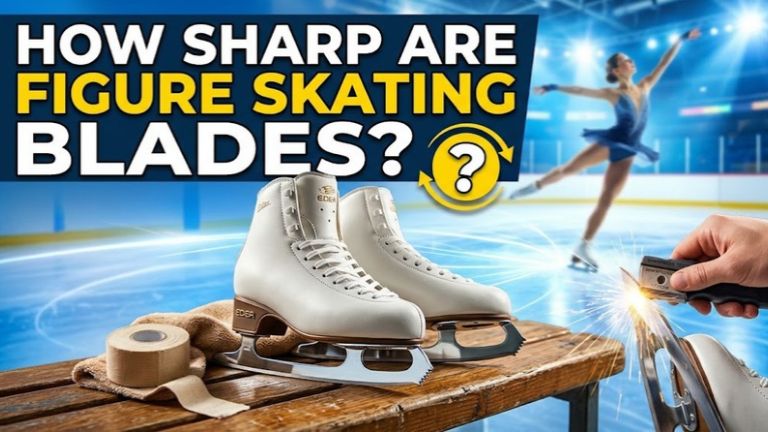
Figure skating blades are extremely sharp, but not in the same way as a knife. Instead of a single central edge, a figure skate blade has two sharp edges (an inside and an outside edge) separated by a concave groove called the radius of hollow (ROH). Those two edges are sharp enough to shave a fingernail, slice through clothing, and carve deep channels into hard ice.
Many people think a skate blade is just a flat strip of metal. In reality, it is a pair of razor-sharp edges built to cut into solid ice. That design is what lets skaters turn, stop, and land jumps.
In this guide, I will explain how the dual edge works, compare skate sharpness to kitchen knives, test your blades at home, and share the safety rules that prevent cuts.
Are Figure Skating Blades Sharp?
Yes, they are. They are sharp enough to grip solid ice and cut skin under pressure. They do not cut on a light touch the way a razor blade does.
The Science of the Dual Edge
A grinding wheel cuts a concave groove, called the hollow, into the bottom of the blade. This creates two parallel sharp corners, one on the inside and one on the outside. Every turn, stop, and jump landing uses one of those two edges.
The Flat Blade Myth
A flat blade runner cannot skate well. The sharp edges are what bite into the ice and let you steer. A thin layer of water on the ice surface helps the blade glide, while the edges give you the grip.
How Sharp Are Figure Skates Compared to Knives?
The easiest way to picture skate sharpness is to compare it with a knife. They are sharp in very different ways. Here is how they differ.
Edge Angle Difference
A kitchen knife has a narrow V-shaped bevel, usually 15° to 20°. A figure skate edge is different. The edges meet at 90° square corners along the hollow arch.
That wider angle makes a skate edge less like a slicing blade and more like a tool built to dig into ice. It is also tougher, which helps it hold up against hard ice.
Pressure and Force
If you gently rest your finger on a skate blade, it will not cut you. The edge needs force to bite. Under body weight or at high speed, though, it can cause severe lacerations.
This is why respect matters more than fear. A blade that feels harmless in your hand can be dangerous during a fall.
Frictional Heat and Bite
Sharpness has to balance two things. The edge must bite into the ice for control, and it must still allow smooth gliding. If the edge digs too deep, you feel drag. If it is too shallow, you slip.
Edge Sharpness Across Skating Disciplines
Different skates use different edge geometry. The hollow depth shapes how much bite you get. This table compares the main types.
| Skate Type | Edge Geometry | Relative Sharpness / Bite | Primary Goal |
|---|---|---|---|
| Freestyle figure skates | Deep concave (3/8″ to 7/16″ ROH) | Very high bite | Jump landing stability and deep edge control |
| Ice dance skates | Moderate concave (1/2″ to 5/8″ ROH) | Smooth glide, moderate bite | Flow, speed, and continuous edge rolls |
| Hockey skates | Variable concave (1/2″ to 5/8″ ROH) | Sharp and maneuverable | Rapid pivots and sudden stopping |
| Speed skates | Completely flat (0 concave) | High glide, low lateral bite | Straight-line velocity and drag reduction |
How to Test If Your Figure Skate Blades Are Sharp
You do not need special tools to check your edges. A few simple tests give you a good idea. Here are three that work well.
1. The Thumbnail Test
This is the standard check at a pro shop. Gently scrape your thumbnail across the edge at a 45° angle. If it shaves a microscopic ribbon of nail, the edge is sharp.
Go slowly and use light pressure. Never run your finger along the edge.
2. The Visual and Light Test
Hold the blade under direct light and look along the edge. A dull edge or a rounded nick will reflect light. A sharp edge stays nearly invisible.
3. The On-Ice Edge Bite Test
Pay attention to how your feet feel during basic stroking and crossovers. If your skates skid or chatter, the edges may be dull or the hollow may not suit you. My guide on how often figure skates should be sharpened lists five more signs it is time for a visit to your technician.
Blade Safety: Can a Figure Skate Blade Cut You?
Yes, it can. Most injuries are accidents, and many can be avoided with a few habits. Here is what to know.
Common Injury Scenarios
Cuts tend to happen in a few situations:
- Falls during synchronized skating
- Close partner holds in ice dance
- Accidental contact during crowded group sessions
Protective Gear
Some skaters wear extra protection, especially in close-contact disciplines. Useful options include:
- Kevlar cut-resistant socks
- Wrist guards
- Blade guards for walking and storage
Safe Handling Rules
Always carry skates with the blades pointing down. Store them in soft soakers, and use hard guards when you walk off the ice. These habits protect you and your edges.
Final Thoughts
Figure skate blade sharpness comes from dual 90-degree hollow edges, engineered for grip, safety, and precision on ice. They are sharp enough to cut when used with force, so careful handling matters. Test your edges often, sharpen on a sensible schedule, and wear protection when you need it.
Frequently Asked Questions
Are figure skates sharp right out of the box?
Usually not in the way you need. New blades often come without a proper hollow, so they need a first sharpening before you skate.
Can you cut your finger on a figure skate blade?
Yes, but it usually takes pressure or movement. A light touch will not cut you, but pressing down or catching your hand in a fall can cause a deep cut. Always treat the blades with care.
Are figure skates sharper than hockey skates?
They are sharpened differently rather than simply sharper. Freestyle figure skates often use a deeper hollow for very high bite, while hockey skates are sharp and built for quick pivots and stops. Each type matches the demands of its sport.
What happens if your figure skate blades are too sharp?
A hollow that is too deep for you can make the skates feel slow and tiring. Your edges may catch unexpectedly during flat glides, and the skates can feel like they chatter when you stop.
