
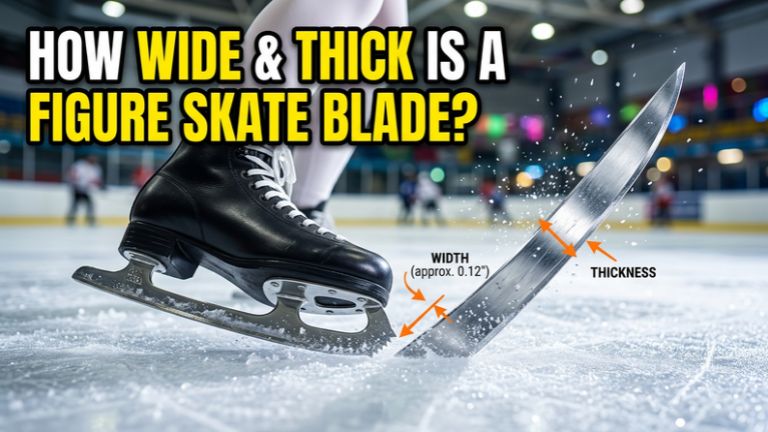
A standard figure skate blade is approximately 0.150 inches (3.8 mm to 4.0 mm) thick. The width of the bottom surface is the same measurement, cut with a concave hollow down the center. Specialized blades, such as dance blades or side-honed models, can taper down to 0.110 to 0.130 inches (2.8 mm to 3.3 mm).
From a distance, blades look like uniform strips of metal. Up close, tiny millimeter differences in width and thickness change edge bite, glide speed, and how a sharpening hollow behaves.
In this guide, I will cover the standard dimensions, how they change by discipline and blade type, how figure skate blades compare with hockey blades, and how thickness affects your radius of hollow.
Figure Skate Blade Dimensions
This table gives the key measurements side by side. Use it as a quick reference.
| Blade Type / Discipline | Thickness / Width (Inches) | Thickness / Width (Millimeters) | Key Performance Advantage |
|---|---|---|---|
| Standard freestyle | ~0.150 in | 3.8 mm to 4.0 mm | Maximum edge depth and landing stability |
| Ice dance blades | ~0.120 in to 0.130 in | 3.0 mm to 3.3 mm | Faster edge-to-edge roll and less ice friction |
| Side-honed / tapered | 0.150 in (top) to 0.120 in (edge) | 3.8 mm to 3.0 mm | Lifted stance and quick directional shifts |
| Hockey blade (for comparison) | ~0.110 in | ~2.8 mm to 3.0 mm | Speed and rapid pivot capability |
How Wide Are Figure Skating Blades?
The standard width of a figure skate blade is 3.8 mm to 4.0 mm, which is about 5/32 of an inch. This is the measurement across the bottom surface of the runner. It is also the same number as the blade’s thickness.
Width Across Disciplines
Width changes a little depending on what you skate. Here is how it usually breaks down:
- Freestyle and pairs: A wider base of 3.8 to 4.0 mm absorbs landing impacts and gives a solid platform for heavy edges.
- Ice dance and synchronized: A narrower runner of about 3.0 to 3.3 mm helps with agile footwork and reduces drag during twizzles.
Neither choice is better overall. Each width matches the demands of its discipline.
Why Width Matters
Width decides how much physical space your sharpener has to grind the radius of hollow (ROH). A wider blade leaves more steel to work with. A narrower blade changes how the same hollow feels.
I explain this more in the sharpening section below.
How Thick Are Figure Skating Blades?
Thickness and width are the same measurement on a blade, so the standard is the same. You will see it written in both inches and millimeters:
- Imperial: approximately 0.150 inches
- Metric: 3.8 mm to 4.0 mm
Specialized blades can be thinner. Dance blades run about 0.120 to 0.130 inches (3.0 to 3.3 mm), and the thinnest specialized models can reach 0.110 inches (2.8 mm).
Parallel vs. Non-Parallel Thickness
Not every blade has the same thickness from top to bottom. The shape of the steel changes how the blade behaves. Here are the main types:
- Parallel blades: The same thickness from the top edge down to the ice. These are standard on beginner and intermediate blades.
- Side-honed blades: Thickest at the stanchion (the top) and thinner at the bottom edge.
- Tapered blades: Thicker at the front near the toe pick and narrowing toward the tail of the runner.
- Parabolic blades: Thinner in the middle section and wider at the ends, for centered spinning stability.
If you are choosing between these designs, my guide on how to choose figure skating blades covers profiles, toe picks, and sizing in more detail.
Figure Skate Blade vs. Hockey Skate Blade Thickness
Figure skate blades are noticeably wider and thicker than hockey blades. A figure skate blade measures about 0.150 inches (3.8 mm to 4.0 mm), while a hockey blade is about 0.110 inches (2.8 mm to 3.0 mm). You can see the difference when you hold them side by side.
Weight and Bite
The two blades are built for different jobs. Hockey blades prioritize low weight and agility, so the runner is narrower. Figure skate blades prioritize deep edge hold and support for jump landings, so they carry more steel.
That extra steel also gives a figure skate blade more material to hold a hollow over time. For a full look at how the two skates differ, read my comparison of figure skates vs. hockey skates.
How Blade Thickness Impacts Your Radius of Hollow
The radius of hollow is the size of the curve ground into the bottom of the blade. It creates the two edges you skate on. Two common hollows are 7/16 inch and 1/2 inch.
Edge Geometry
Blade thickness changes how a hollow feels. A 3.8 mm blade with a 7/16 inch hollow feels different from the same blade with a 1/2 inch hollow. A narrow 3.0 mm dance blade behaves differently again, because the same hollow is cut across less steel.
This is why hollow choices should be made with your coach and a skilled technician. They can match the hollow to your blade and your skating. My guide on how to take care of figure skates explains how often blades usually need sharpening.
Sharpening Wear and Tear
Every sharpening removes a small amount of metal. Over a blade’s lifespan, repeated sharpenings change its height and can slightly alter its width near the bottom edge. Eventually, the blade runs out of life.
Ask your technician how much metal your blade has left before a big sharpening. My post on how long figure skates last covers the other warning signs that it is time to replace your skates.
Final Thoughts
A standard figure skate blade is approximately 0.150 inches (3.8 mm to 4.0 mm) thick, and that same number is its width. Dance and side-honed blades go thinner, and hockey blades thinner still. Knowing these measurements helps you understand edge bite, glide, and how your hollow works.
Ask your coach or sharpener before making changes to your setup.
Frequently Asked Questions
Are all figure skate blades the same thickness?
No. Standard freestyle blades are about 0.150 inches (3.8 mm to 4.0 mm). Specialized blades, like dance and side-honed models, can be thinner, down to about 0.110 to 0.130 inches (2.8 mm to 3.3 mm).
How do you measure figure skate blade thickness at home?
A pair of digital calipers is the easiest tool. Measure across the bottom of the runner, away from the toe pick, and check a few spots along the blade. Wipe the blade clean first, and be careful around the sharpened edges.
Do lightweight aluminum matrix blades have the same edge thickness as traditional steel?
In most cases the steel runner that touches the ice is close in thickness to a traditional blade. The aluminum is in the frame above it, which lowers weight without changing the part that meets the ice. For the exact figure, check the specs for your model.
Does blade thickness affect jump landings?
It plays a small part. A wider base of 3.8 to 4.0 mm gives a stable platform for landings, which is why freestyle and pairs skaters use it. Boot support, fit, and technique matter just as much.
