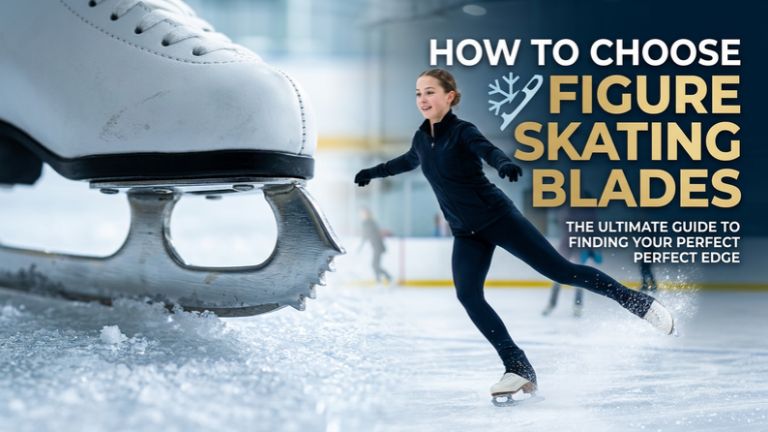
The boot gives you ankle support, but the blade is where your edges, spins, and jump take-offs actually happen. A blade that does not match your level can make skating harder than it needs to be, and it can slow your progress.
To choose the right figure skating blades, match the blade to your skating level and discipline by checking four things: the blade profile (rocker), the toe pick pattern, the radius of hollow, and the blade construction. Many beginners do well with a flatter profile and a simple straight toe pick, while advanced jumpers often prefer a more curved profile and a more aggressive toe pick.
In this guide, I will explain each of these specs in plain language. Then I will show you how to match them to your skill level, so you can shop with confidence.
Figure Skate Blade Types: Materials and Construction
Not all blades are built the same way. The material and construction change the weight, the feel, and the price. Here are the main options you will see.
Standard Steel Blades
These are the traditional, budget friendly blades found on most beginner and recreational skates. They are made of steel and are tough and reliable. For lower levels, they are usually all you need.
Lightweight Blades
Some higher end blades use a lighter frame, often aluminum, with a steel runner on the bottom. The goal is to cut weight, which can reduce leg fatigue during long sessions and repeated jump landings. They cost more, and the benefit matters most to skaters training often at a higher level.
Tapered and Specialty Designs
Some makers offer blades with tapered or specially shaped runners that are meant to make edge changes feel quicker or spins feel more responsive. The names and designs differ by brand. If a product claims a special shape, ask a coach or pro shop what it really changes before you pay extra.
Understanding Figure Skate Blade Profile (Rocker and Radius)
The blade profile is one of the most important specs, and it is the one new skaters ask about the most. It is also easy to understand once you picture it.
What Is a Blade Profile?
The bottom of a figure skate blade is not flat. It curves gently from front to back, like the bottom of a rocking chair. This curve is called the rocker, or the profile, and it is usually described as a radius in feet, such as 7 foot or 8 foot.
A smaller number means a more curved blade. A larger number means a flatter blade.
7-Foot vs. 8-Foot Profile
Here is a simple comparison:
| 7-Foot Profile | 8-Foot Profile | |
|---|---|---|
| Curve | More curved | Flatter |
| Steel on the ice | Less | More |
| Feel | Quick turns and responsive spins | More stable and steady |
| Often chosen by | Advanced free skaters, dancers, and synchro skaters | Beginners and intermediate skaters |
A flatter profile puts more steel on the ice, which feels stable and helps with gliding and jump landings. A more curved profile makes turning and spinning easier, but it asks for better balance. These are general trends, and exact profiles vary by brand and model.
The Spin Rocker
Most blades also have a small area, often called the spin rocker or sweet spot. It sits toward the front of the blade, just behind the toe pick. This is the part of the blade that skaters center their spins on.
Choosing the Right Toe Pick Pattern
The toe pick is the set of teeth at the front of the blade. It helps you launch jumps and anchor certain spins. Different patterns suit different levels and disciplines.
Straight-Cut Toe Picks
These have a simpler pattern with clean, parallel teeth. They give a smooth release on basic toe jumps like the toe loop and flip. They are a great fit for Learn-to-Skate and early levels.
Cross-Cut Toe Picks
Cross-cut picks have teeth that grip the ice more firmly. This helps stop your foot from skidding on high impact take-offs, like the lutz and axel. Skaters working on harder jumps often prefer them.
Dance and Synchro Toe Picks
These picks are usually smaller and set a bit higher. The idea is to avoid catching the ice by accident during close footwork or partner holds. If you skate dance, my guide on figure skates vs. ice dance skates explains the other differences in boots and blades.
Radius of Hollow and Blade Sizing
Two more details matter before you buy: the hollow and the size. The hollow is something your sharpener controls, so you can adjust it later. The size is something you need to get right from the start.
Radius of Hollow (ROH)
Every sharpened blade has a shallow groove running along the bottom. This groove creates two edges, and its depth is called the radius of hollow. Common figure skate hollows include 7/16 inch, 1/2 inch, and 5/8 inch.
A smaller radius means a deeper groove and more bite into the ice, but less glide. A larger radius means a shallower groove, which glides more easily and grips less. Many skaters start with a standard hollow, then adjust with help from their coach and sharpener.
If you are not sure how often to sharpen, my guide on how to take care of figure skates covers the schedule.
Blade Sizing vs. Boot Size
Blades come in specific lengths, often in quarter inch steps like 9.25, 9.5, or 9.75 inches. The right blade length depends on the sole of your boot. A pro shop will measure the boot and match the blade to it.
Do not guess here. A blade that does not match the boot can hurt balance and make the mounting harder to do well.
Recommended Blade Setups by Skater Level
Here is a simple way to pick based on where you are right now. Always check with your coach, since they know your goals and your skating best.
Beginner or Recreational
Look for a basic steel blade with a flatter profile and a straight-cut toe pick. You do not need anything fancy. Comfort, a good fit, and a clean sharpening matter more than special features.
Single Jumps and Early Spins
This level often does well with an intermediate blade, still with a fairly flat profile, and a cross-cut pick for firmer take-offs. This is where many skaters start to feel a difference between blade models.
Doubles, Triples, and Advanced Skating
Advanced skaters often move to a more curved profile and a more aggressive cross-cut toe pick. A lightweight construction can also help with fatigue. At this stage, a coach and an experienced technician are your best guides.
Final Thoughts
Choosing figure skating blades gets easier when you break it down. Look at the profile, the toe pick, the hollow, and the size, and match them to your level. The right blade supports safer landings and steadier progress.
Take your time, and ask your coach or pro shop before you buy. Once you have your blades, keep them in good shape with my guides on how to clean figure skates and how to remove rust from figure skate blades.
Frequently Asked Questions
Can you put any figure skate blade on any boot?
No. The blade needs to match the size of the boot sole, and the mounting needs to fit the boot type and level. Have a skilled technician mount the blades, since a poor mount can hurt your balance. Many skaters buy the boot and blade as a matched set for this reason.
How do I know what size figure skate blade I need?
The blade size depends on the length of your boot sole, not on your shoe size. A pro shop can measure the sole and pick the right blade length. If you are buying online, ask the seller to confirm the match.
How long do figure skate blades last before needing replacement?
Blades can last for years, but it depends on how often you skate and how often you sharpen them. Each sharpening removes a little metal, and rust can shorten their life. My guide on how long figure skates last covers the warning signs in more detail.
Are expensive figure skate blades worth it for beginners?
Usually not. Beginners gain more from a good fit and proper sharpening than from high end features. It makes more sense to upgrade when your skills grow and your coach suggests it.
